Version 3.63.2
Get users' endpoints now include root users
The GET /users and GET /users/{user_id} endpoints have been enhanced to include root users in their responses, providing you with a unified view of all users within a corporate identity.
What's changed
- GET /users now returns all users including the root user, in addition to authorised users
- GET /users/{user_id} now accepts root user IDs and returns root user details instead of returning a 404 error
Background
Previously, these endpoints only returned authorised users, requiring a separate call to GET /corporates to retrieve root user information. This created unnecessary complexity when building user lists, or user-management screens that displayed all users. Root users are now included in these GET /users endpoints for consistency and ease of integration.
Important Notes
- Root user IDs are only accepted in the GET endpoints mentioned above
- Root user IDs are not accepted in other user management endpoints such as
PATCH /usersorPOST /users/{user_id}/activate - This change maintains backward compatibility with existing integrations
Impact
Embedders: You can now build unified user lists without special handling for root users. Consumers APIs: No breaking changes, existing integrations will continue to work. Root user is still retrieved via GET / consumers.
API keys now managed as API Clients
The way to access API keys in the embedder portal is changing. All current API keys that you have in-use remain valid, but are displayed and managed in a new way.
What's changed
The API keys (accessible only to the root user) are now managed as part of a broader API Client construct accessible through the API menu item:
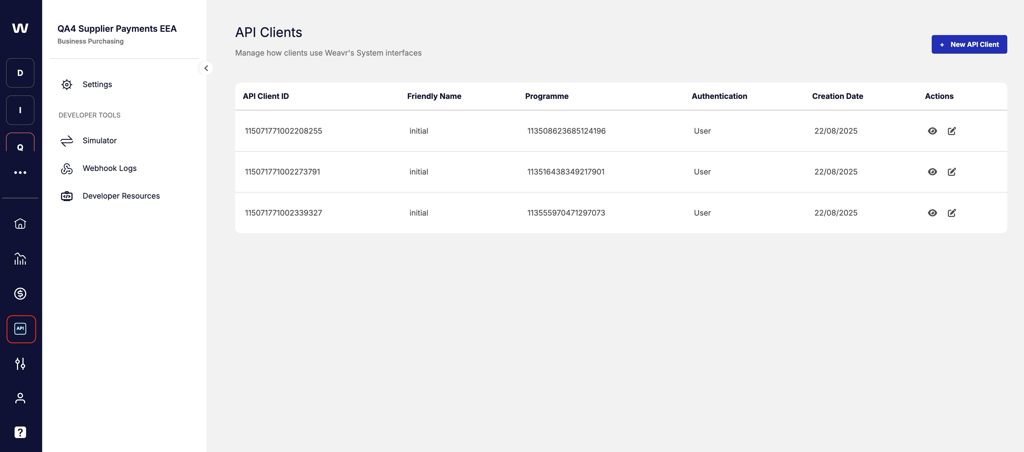
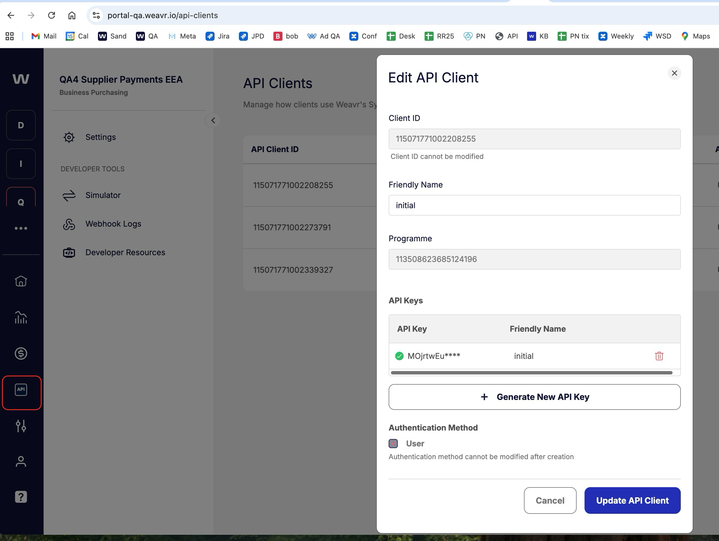
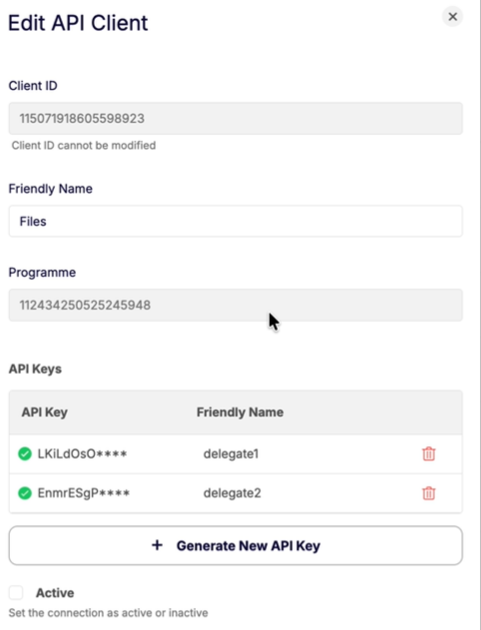
Your current API key(s) have been organised under an API Client with Authentication type “User”. You can continue view and manage your keys via the portal as below:
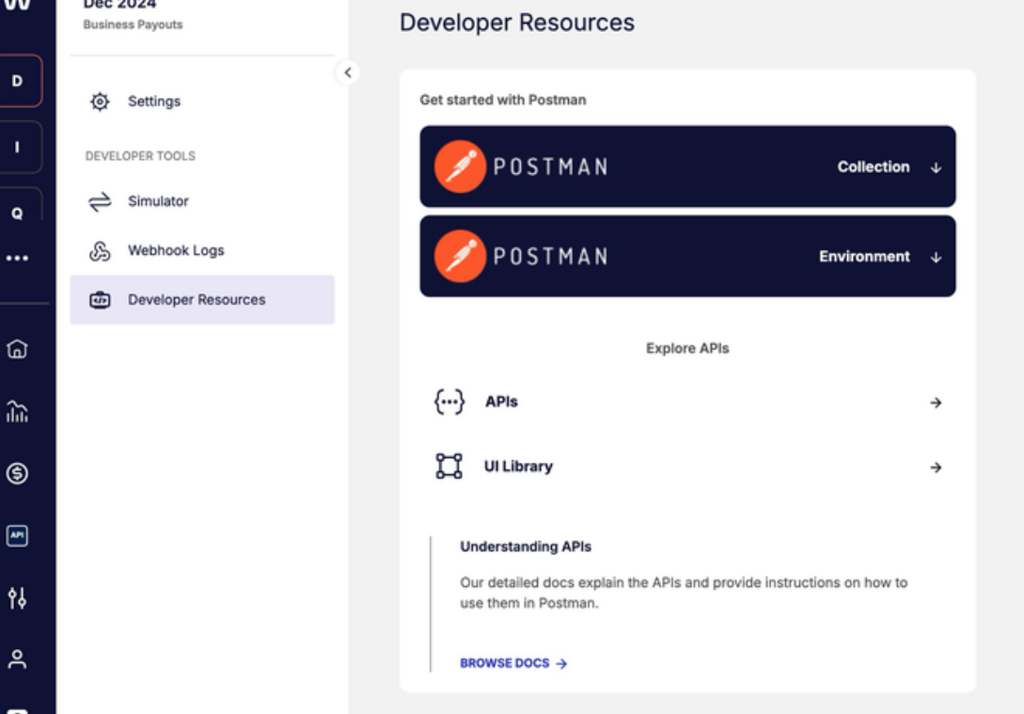
Accessing the Postman collections (all embedder users on Sandbox) is now done through the ‘Developer Resources’ link:
Background
The changes are being done to support an ongoing initiative to support additional API authentication mechanisms (such as using a certificate instead of a user auth_token).